The Network
A hospital-at-home program shouldn't require going it alone.
The fixed costs are what break small programs: vendor minimums, contracts, and compliance overhead all priced for volume you don't have yet. Those costs are nearly identical whether you run four patients or forty. We are building a network so founding partners can shape the contracts, data standards, and operating layer that make shared infrastructure more useful as participation grows.
Shared purchasing
A purchasing layer built around collective scale.
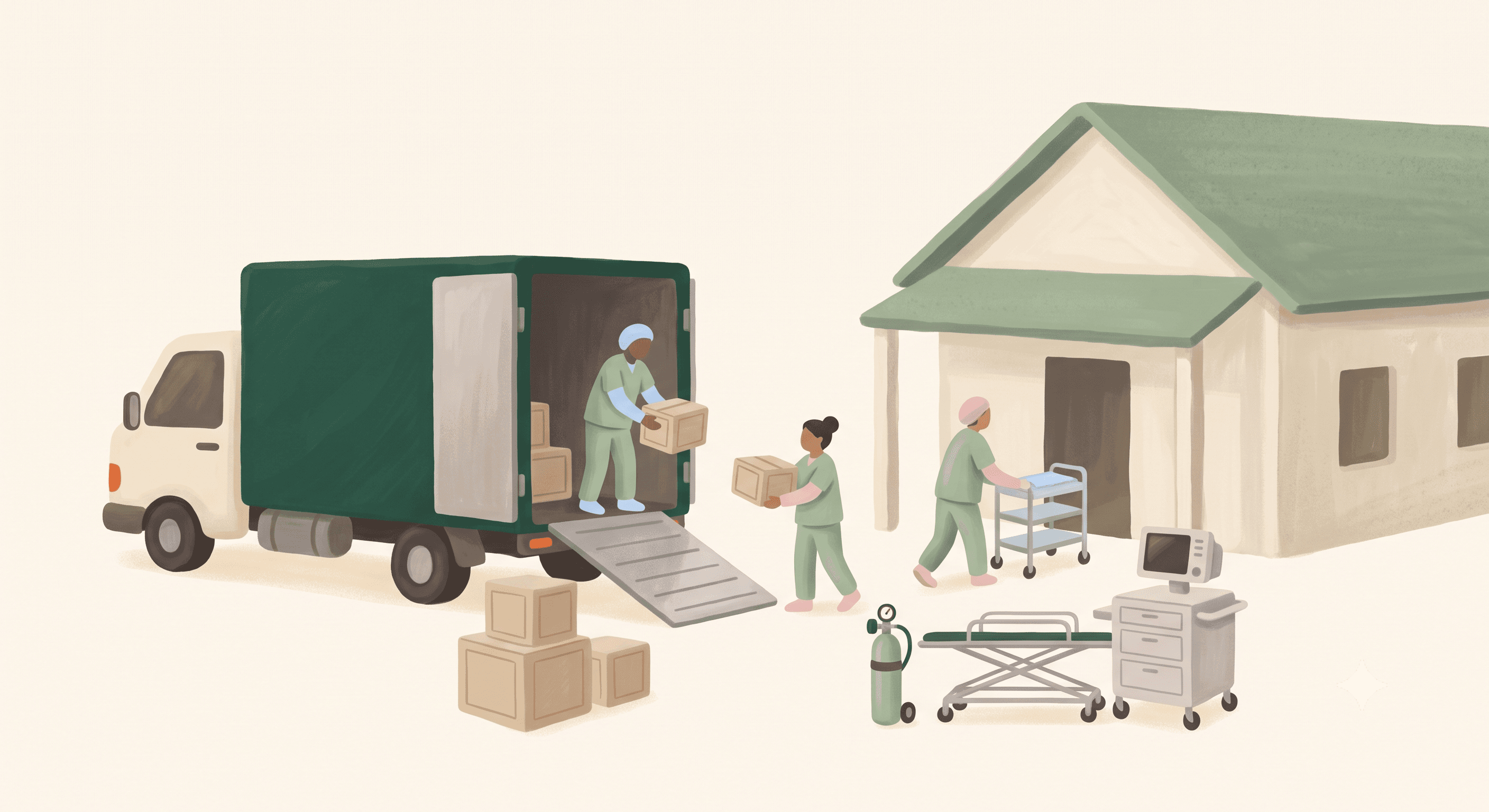
Remote monitoring, DME, mobile imaging, couriers, home pharmacy — every one of them prices for volume, and every one of them sets a floor. Founding partners will evaluate standardized requirements and aggregated purchasing opportunities as membership grows. Each hospital remains responsible for its own contracts and approvals.
- One formulary covering monitoring, DME, mobile imaging, couriers, and home pharmacy
- A purchasing model designed to reduce duplicated contracting
- Access to volume-based pricing where legally and operationally feasible
Benchmarks and standards
Know whether your numbers are good, or just normal.
Published hospital-at-home outcomes come almost entirely from large academic centers, which tells a ninety-bed hospital very little. Founding partners will help define a common metric ontology for census funnel conversion, length of stay, escalation rate, patient experience, and program economics. Comparable benchmarking becomes useful when the network has enough appropriately matched data.
- Funnel conversion, length of stay, escalation, and acceptance rates
- Comparable by size and payer mix when the data supports it
- Common standards developed with founding partners
Shared intelligence
The platform is designed to improve as the network grows.
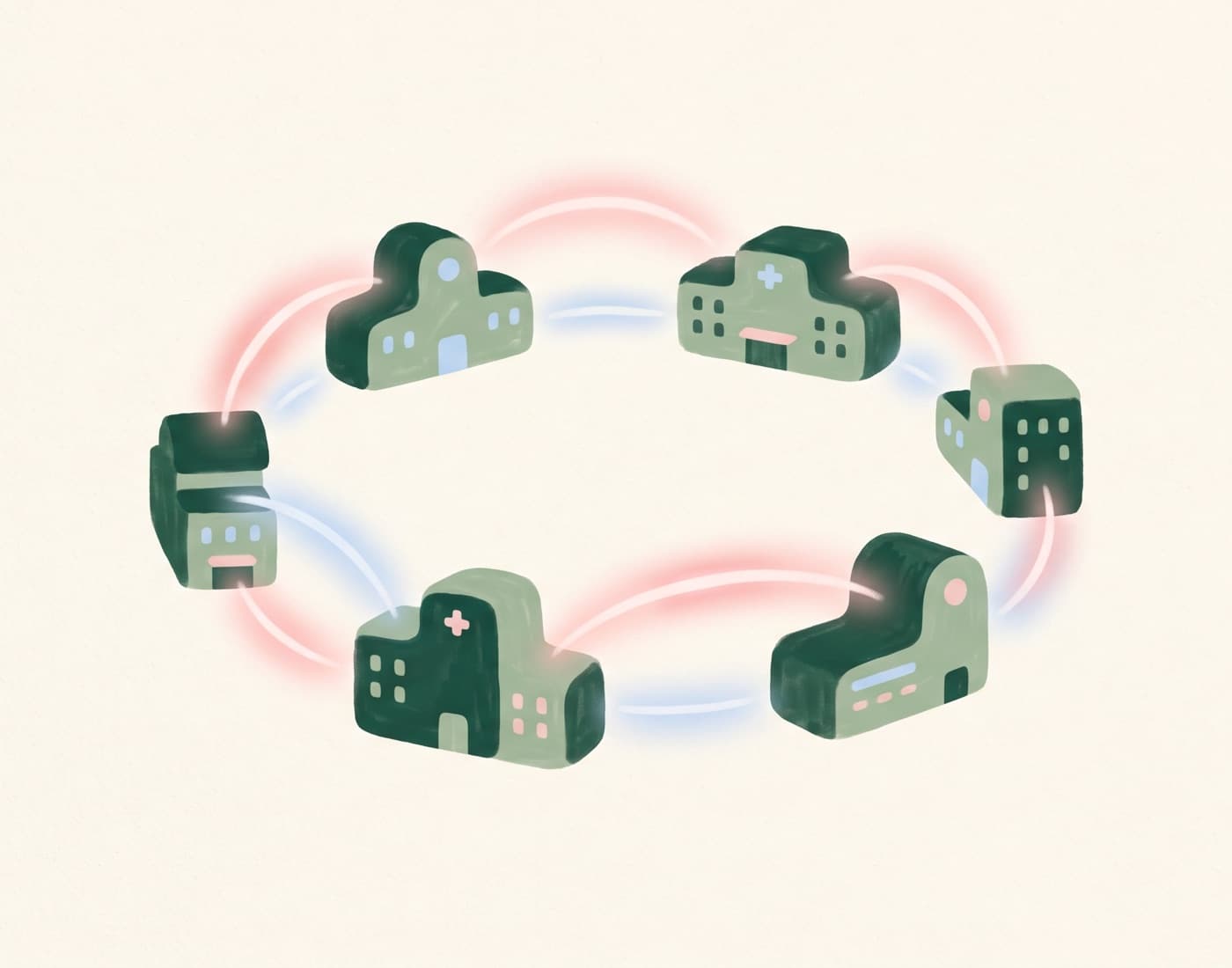
The platform is being designed to capture structured feedback that can support evaluated improvements over time. Any cross-hospital learning will depend on participating hospitals' agreements, privacy controls, governance, and sufficient validated data; raw PHI is not intended to leave the applicable hospital environment.
- Structured feedback can inform evaluated improvements
- Cross-hospital learning subject to hospital approval and governance
- Privacy-preserving architecture designed from the start

Also included
The rest of what you get.
Compliance library and audit defense
Waiver applications, CMS reporting templates, policy documents, survey preparation. Designed to give founding partners a shared starting point for the regulatory overhead of hospital-at-home, which is largely fixed and exactly the kind of cost a pool should carry.
Payer conversations, standardized
As the network develops, we plan to offer standardized product definitions and quality-reporting packages that individual hospitals may use in their own payer conversations. Each hospital will negotiate its own rates and contracts.
What's live when you join, and what isn't
Build the network with us.
Or start with the Opportunity Index preview — it takes 30 seconds. Try the preview